1. Check who could enter
The early French Championships restricted entry to members of French tennis clubs. This is more precise than saying that only French citizens could play: club membership and nationality are different criteria. An international championship open to players from other national associations emerged later, creating the basis for the event's established place among the majors.
When reading early title lists, look for the archive's distinction between the restricted championship and the international event. Some historical accounts also discuss the World Hard Court Championships, which were played on clay. In that older usage, “hard court” did not mean the acrylic surfaces associated with modern Melbourne or New York.
2. Connect the stadium to Davis Cup
The French team known as the Four Musketeers comprised Jean Borotra, Jacques Brugnon, Henri Cochet and René Lacoste. Their Davis Cup success created the need for a suitable home venue to defend the trophy. The new stadium at the edge of Paris became the setting for both that defence and the French Championships.
The stadium took the name of Roland Garros, the French aviation pioneer. He was not a tennis champion after whom a singles trophy had been named. Distinguishing the aviator, the venue and the tournament prevents a common confusion. The men's singles trophy, the Coupe des Mousquetaires, instead recalls the French team's tennis achievements.
3. Understand what red clay changes
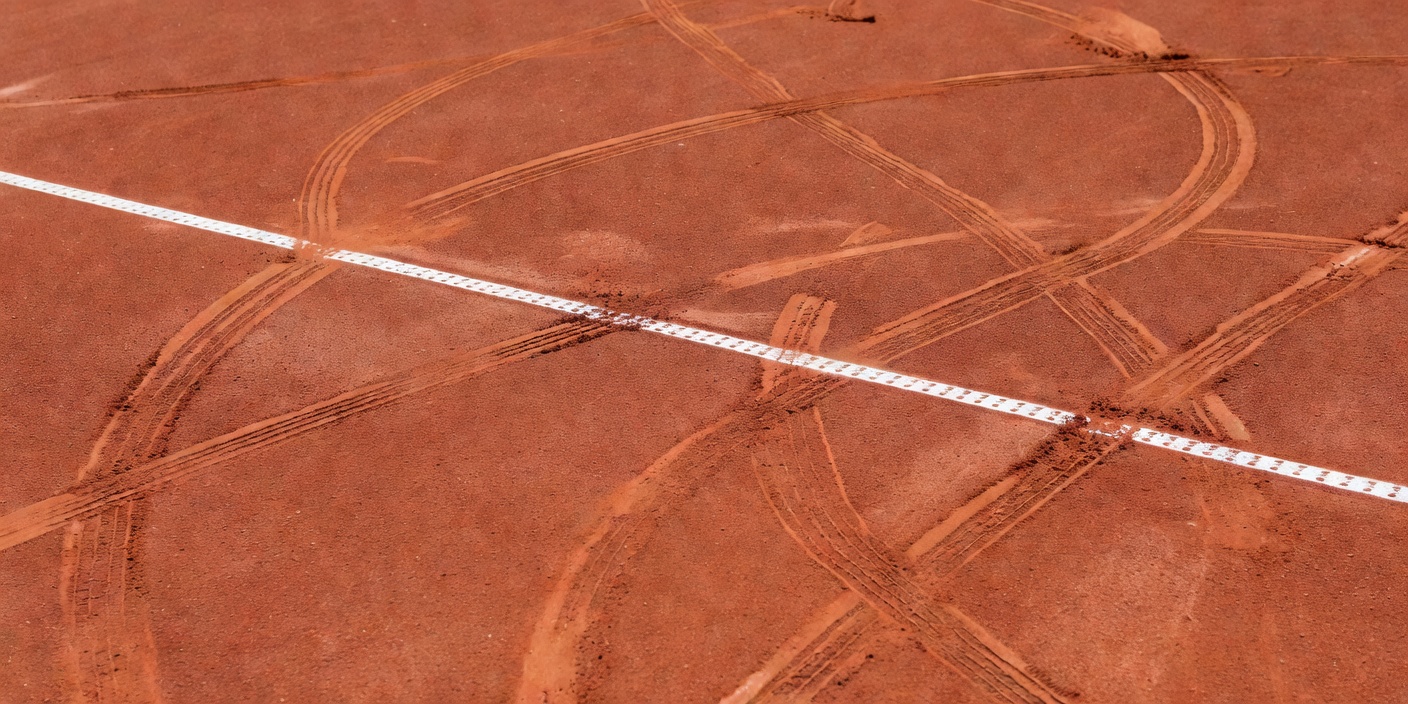
The visible red layer includes crushed brick, laid over a prepared structure beneath. Maintenance, watering and weather influence how the court behaves. Clay generally encourages a higher bounce and allows players to slide into strokes, but those tendencies are not a guarantee that every rally will be long or every serve ineffective.
Use surface as an explanation, not a complete verdict on style. Topspin, patience and recovery position can be valuable, while aggressive returns and early ball striking can still shorten points. Comparing Roland-Garros with Wimbledon is most useful when you examine how players adapt their movement and shot selection, rather than assigning each champion a single permanent label.
4. Locate the Open Era turning point
The Open Era ended the majors' exclusion of professional players. Roland-Garros was the first of the four major championships to admit professionals alongside amateurs in that transition. Ken Rosewall won the men's singles title at that first open French championship, while Nancy Richey won the women's singles.
This change expanded who could compete for the same recognised titles. It did not instantly remove every contractual dispute or organisational division in tennis. Treat “open” as a change in eligibility, not as a promise that every eligible champion entered. A draw remains the appropriate source when you need to establish who actually participated.
5. Compare achievements without flattening them
Chris Evert, Björn Borg, Steffi Graf and Rafael Nadal provide distinct starting points for studying sustained singles success on Parisian clay. Their championship records belong to different competitive settings. Begin with the official results, then compare a specific feature such as repeat title runs, results across surfaces or the route through an individual draw.
A career Grand Slam means winning each of the four majors in a particular discipline over a career. For players whose strongest results came on other surfaces, winning Roland-Garros could complete that set. That narrative differs from repeatedly defending a Paris title. Neither question needs a speculative ranking of which achievement was inherently harder.
6. Keep the venue's development in view
Roland-Garros has expanded and altered its facilities while retaining its clay identity. Court Philippe-Chatrier, Court Suzanne-Lenglen and Court Simonne-Mathieu belong to different stages of that development. A modern photograph should therefore not be used as a literal picture of the setting in which an earlier final took place.
For a reliable reading order, consult the tournament's history first, then open a particular draw or champion record. If your question concerns surface preparation or a stadium alteration, use the corresponding official venue explanation. Matching the source to the question is more useful than treating a single championship summary as an answer to everything.