1. Start at Worple Road
The first Championships took place at the All England Club's grounds on Worple Road in Wimbledon. The club had a croquet background before lawn tennis became central to its activity. Spencer Gore won the inaugural gentlemen's singles competition, the only championship event on that first programme.
Ladies' singles and gentlemen's doubles were added later, followed by other disciplines. This matters when reading the phrase “Wimbledon champion”: the range of titles available was not constant throughout the event's history. Charlotte Cooper and Dorothea Lambert Chambers belong to the early women's singles story, but their records should be read within the competition that actually existed.
2. Distinguish the two grounds
The Championships moved from Worple Road to Church Road as the event outgrew its earlier home. The familiar Centre Court belongs to the Church Road setting. A reference to Centre Court in an account of the old grounds does not mean that the match took place in today's stadium.
The All England Lawn Tennis and Croquet Club, commonly shortened to the All England Club, is the institution behind the Championships. Wimbledon is also the name of the surrounding London district. Keep the club, the tournament and the place distinct when searching archives: each can lead to a different kind of historical material.
3. Learn how the challenge round worked
Under the former challenge-round system, the defending champion could wait while other entrants contested an all-comers competition. Its winner then challenged the title-holder. That structure differs from a knockout draw in which the defending champion must progress through the same sequence of rounds as everyone else.
The challenge round was eventually abolished. When comparing repeated titles across that boundary, check the number and nature of the matches required, rather than assuming an identical route to each championship. This does not invalidate early titles. It identifies a structural difference that a simple list of winners cannot explain on its own.
4. Place open tennis in the sequence
Before the Open Era, professionals were excluded from the Championships. Players who turned professional could therefore disappear from Wimbledon draws while continuing to compete elsewhere. The arrival of open tennis allowed professionals and amateurs to enter the same major tournaments and changed what the championship field could represent.
Rod Laver and Billie Jean King won the singles titles at the first open Wimbledon. Laver is particularly useful for studying the divide because his major record spans amateur and open competition, separated by professional years outside the majors. Read that gap as a consequence of eligibility rules, not as evidence that his playing career had stopped.
5. Avoid a fixed picture of grass-court tennis
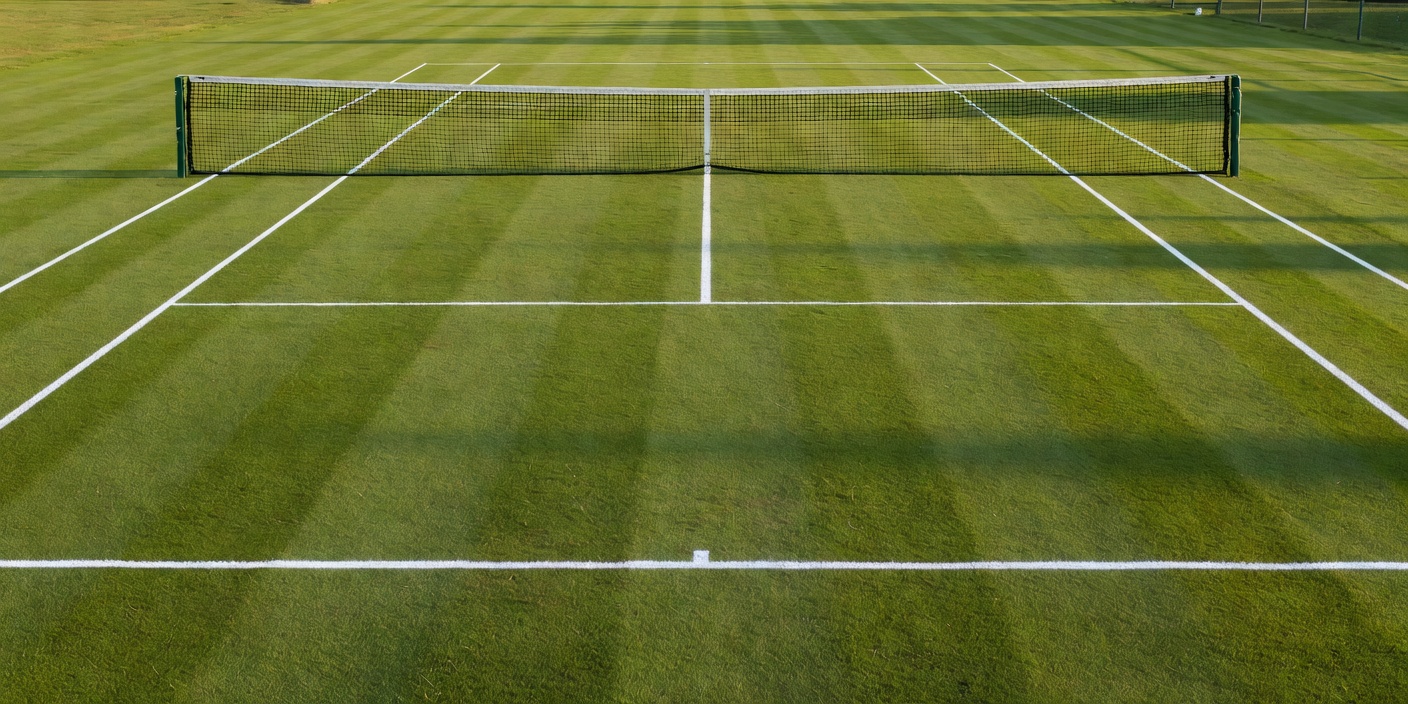
Grass has historically rewarded effective serving, a low contact point and comfort moving forward. Serve-and-volley tennis, in which the server follows the delivery towards the net, features prominently in many Wimbledon accounts. Yet success on grass has never belonged exclusively to one tactic. Return quality, passing shots and baseline consistency can also determine a match.
Rackets, strings, grass composition and court preparation have changed across the championship's history. Martina Navratilova, Björn Borg, Pete Sampras and Serena Williams offer different examples of successful play, not interchangeable demonstrations of a single “Wimbledon style”. Choose an observable feature to compare, such as return position or frequency of net approaches, rather than guessing from reputation.
6. Read traditions alongside rule changes
White clothing, grass courts and the event's formal titles contribute to Wimbledon's identity. They do not mean that every rule has remained untouched. Covered show courts altered the handling of rain interruptions, while changes to final-set tiebreak procedures altered how very long matches could end.
When studying a particular final, check the rules that applied to that edition. Do not impose a later tiebreak format on an earlier score. Likewise, distinguish a match played outdoors from one completed under a roof. The official history and results archive are the appropriate places to connect an individual contest with its conditions.